
Tuscany’s Hidden Villages in January

The winter mist clings to the valleys of Lunigiana like a whispered secret, veiling ancient stone villages in an ethereal embrace. Here, in this forgotten corner of northern Tuscany where the Apennines meet the Ligurian border, January reveals an Italy that exists beyond the summer crowds and guidebook clichés—a place where time moves to the rhythm of woodsmoke and church bells.
My journey began in Pontremoli, the historic capital of Lunigiana and gateway to this mystical land. Walking through its medieval centre on a crisp January morning, I found myself alone on cobblestone streets worn smooth by centuries of pilgrims traveling the Via Francigena. The town’s baroque churches stood silent, their terracotta facades glowing amber in the weak winter sun. At the Museo delle Statue Stele, prehistoric stone idols gazed back at me with expressions unchanged for five thousand years—a humbling reminder of how briefly we walk these ancient paths.
From Pontremoli, the winding roads led me deeper into the valley toward Filattiera, a hilltop hamlet crowned by the Romanesque Pieve di Sorano. This tenth-century church, standing alone among chestnut groves, offered panoramic views that stretched to the snow-dusted peaks of the Apuan Alps. Inside, the cold stone walls still bore traces of medieval frescoes, their colors faded but their devotion eternal.
The Fortress Villages
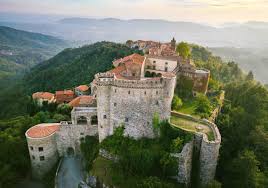
Lunigiana earned its name from the ancient goddess Luna, and her mysterious presence seems to linger in every shadow. The region is defined by its fortress-villages, each one crowned by a Malaspina castle—testament to the powerful family who ruled these lands for centuries. Of these, Fosdinovo proved the most enchanting.
 Off The Beaten Track Italy
Leave a comment