
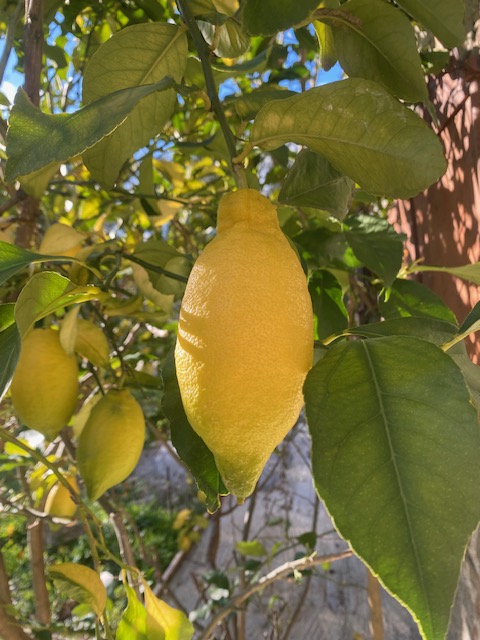
February in Tuscany has a quiet kind of glamour. The vineyards are sleeping, the hill towns feel more lived-in than performed for visitors, and the light sits low and honeyed on the stone. Then you round a wall, step through an old gate, and there it is: a lemon tree heavy with fruit, glossy leaves catching the sun like lacquer, bright yellow lanterns against winter air. Tuscany in February is often sold as a season of museums and empty piazzas. But if you follow the scent, it becomes something else entirely.
We tend to file lemons under Sicily and Campania, and with good reason. Amalfi’s terraces and the gardens of the south have built a whole mythology around citrus. Yet Tuscany has its own lemon story, written in the language of villas, walled gardens, and patient horticulture. Here, lemons are less about spectacle and more about intimacy: the pleasure of finding them where you did not expect them, thriving in sheltered courtyards and along sun-warmed walls, in places designed to protect beauty from the bite of winter.
The secret is the limonaia, the lemon house. In parts of Tuscany, especially around Florence and the Medici villas, lemons have been cherished for centuries, collected and cultivated like living jewellery. When the cold threatens, the trees are moved into long, elegant buildings with big windows, where they can keep drinking in light while staying out of frost’s reach. In February, you can feel that tension between seasons. Outside, the air is crisp and clean. Inside a limonaia, it is warmer, faintly humid, and the citrus perfume hangs in the air like a memory of summer.
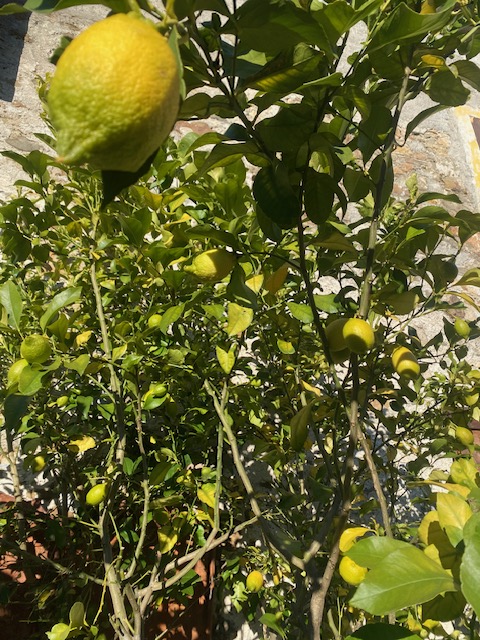
February can be a harsh month but as one walks among the lemons in Tuscany, one feels the hope of the return of life in Spring.
Walking through a historic garden at this time of year is a sensory contradiction in the best way. Your coat is zipped, your breath shows, and yet your hands brush past leaves that smell like sunshine. The lemons themselves look almost too vivid for February, as if someone has placed them there to cheer up the landscape. Some are perfectly oval, others knobbly and characterful, each one a little sculpture. The trees are often potted in terracotta, lined up with a formality that feels both grand and quietly practical. This is Tuscany’s version of citrus: curated, protected, and adored.
The beauty is not only in the trees, but in the setting. Lemon terraces in the south feel dramatic, close to the sea, all cliffs and salt air. Tuscany gives you citrus against a different backdrop: pale stone walls, clipped hedges, cypress silhouettes, and that unmistakable geometry of Italian gardens. The yellow fruit seems to glow even more against muted winter greens and the grey-blue of distant hills. It is the kind of scene that makes you slow down without meaning to, as if your walking pace has been adjusted by the light.
A perfect February day might look like this: you start in a small town where the morning espresso is taken standing at the bar, and you head out just as the sun begins to soften the cold. You wander into a garden you had half-planned to visit, expecting bare branches and quiet paths. Instead, you find citrus. Maybe it is a villa garden outside Florence, or a tucked-away estate where the lemons sit in rows like a bright audience watching winter pass. You linger longer than you planned, reading plaques, peering into sheltered corners, noticing how walls are placed to catch sun and block wind. You begin to see Tuscany differently, not as a static postcard, but as a landscape that has always been shaped by desire and ingenuity.
And then there is the taste. Lemons in February are not an abstract idea, they are something you can hold. In a local trattoria, you might finish lunch with a simple olive oil cake and a lemon zest that lifts the whole thing into brightness. Or you might find a jar of marmellata di limoni in a small shop, made by someone who knows exactly how to balance sharpness and sweetness. Even a hot tea with lemon feels like it belongs more deeply to the place when you have seen the trees themselves, working quietly through the season.
Tuscany in February does not shout. It whispers. The lemon trees are part of that whisper: a small, radiant proof that winter can still be generous. Sicily and Campania will always be the headline acts of Italian citrus. But Tuscany, in its own graceful way, offers a lemon season that feels like a secret. And once you have stood in a Tuscan garden with cold air on your cheeks and lemon scent in your hands, you will never again think of February as an off-season.
 Off The Beaten Track Italy
Leave a comment