
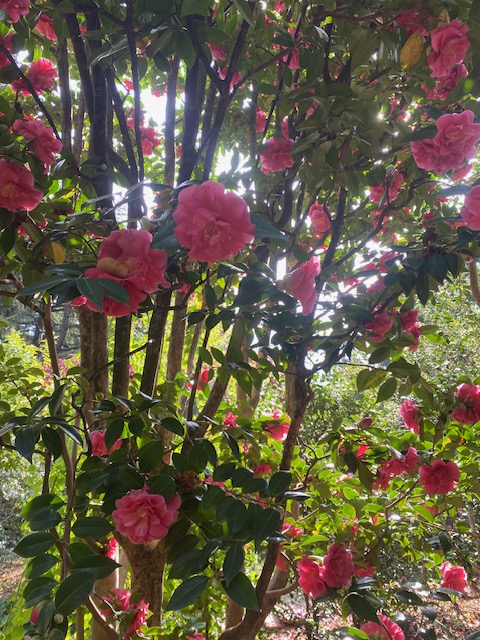
Why March is the perfect time to witness nature’s most exquisite spectacle
7 min read
There are few places in Europe where the arrival of spring feels as enchanting as it does along the shores of Lake Maggiore. Nestled between the foothills of the Alps and the gentle waters of Italy’s second-largest lake, this corner of Piedmont and Lombardy has been a haven for camelia lovers for more than two centuries. And if you want to experience the gardens at their breathtaking best, there is only one month that truly matters: March.
A Climate Made for Camelias
Lake Maggiore enjoys a uniquely mild microclimate, sheltered by the surrounding mountains from the harshest northern winds. The acidic, mineral-rich soil along its western shore provides the perfect growing conditions for Camellia japonica and its many cultivars. These elegant shrubs, originally brought to Europe from East Asia in the eighteenth century, found a second home here — and they have been thriving ever since. By late February, the first buds begin to swell, and by mid-March the gardens are ablaze with thousands of blooms in every shade of pink, red, white, and crimson.
Gardens You Must Visit
The most celebrated destination is the Parco delle Camelie in Locarno, located on the Swiss side of the lake, where over 900 varieties of camelias are arranged across a beautifully landscaped hillside overlooking the water. Every March, the park hosts the famous Locarno Camelia Festival, drawing enthusiasts and botanists from around the world.
On the Italian shore, the magnificent Villa Taranto Botanical Gardens near Verbania boast one of Europe’s finest collections of camelias, set within a sprawling estate of terraces, fountains, and woodland paths. The gardens were created by Scottish captain Neil McEacharn in the 1930s and remain a masterpiece of horticultural design.

Further along the western shore, the Giardini di Villa Giulia in Pallanza offer a more intimate experience, with ancient camelia specimens framing views of the Borromean Islands. Nearby, the Isola Madre — the largest of the Borromean Islands — is home to one of the oldest camelia collections in Italy, some trees dating back nearly 200 years. The island’s English-style landscape garden is a serene haven where white peacocks wander beneath towering camelia trees.
Do not overlook the charming Parco delle Camelie di Sant’Andrea at Verbania Pallanza, a lesser-known gem where local varieties flourish in a peaceful setting away from the crowds. And for those venturing to the eastern shore, the Camelia Garden of Villa Anelli in Oggebbio houses over 600 cultivars in a private collection that opens its gates each spring — a true pilgrimage for the devoted camelia admirer.
Why March?
Timing is everything. Visit too early and the buds are still tightly closed; arrive in April and many of the finest blooms will have already fallen. March sits in that magical window when the gardens reach peak flowering, and the mild lakeside air carries the subtle, sweet fragrance of fresh camelias. The light is soft and golden, the tourist crowds have not yet descended, and the surrounding mountains may still carry a dusting of snow — creating a dramatic backdrop for the vivid blossoms below.
Beyond the gardens, March on Lake Maggiore offers charming lakeside towns to explore, wonderful Piedmontese cuisine to savour, and the quiet pleasure of being somewhere truly special before the rest of the world catches on. The weekly markets in Stresa and Verbania overflow with local cheeses, wines, and early-spring produce, while the grand Belle Époque hotels along the waterfront are beginning to stir back to life after the winter months.
Whether you are a passionate gardener, a lover of Italian culture, or simply someone who appreciates beauty in its purest form, a March visit to the camelia gardens of Lake Maggiore is an experience that will stay with you long after the last petal has fallen.
 Off The Beaten Track Italy
Leave a comment