
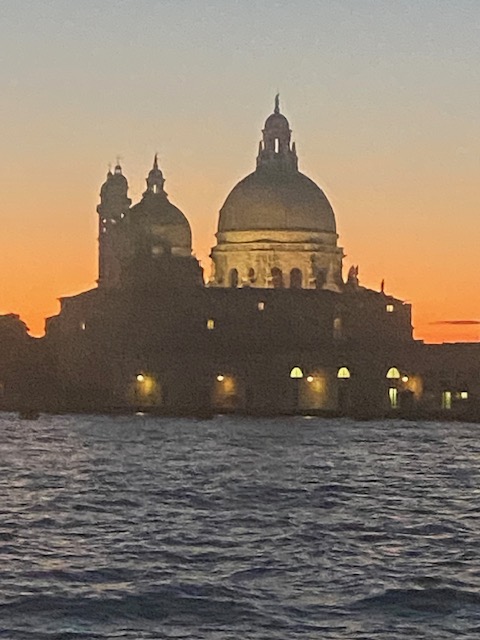
Venice is often introduced with a warning: too many tourists, too little space, a city overwhelmed by its own fame. And yes, there is truth in that. The narrow calli can feel congested, the vaporetto lines long, and St. Mark’s Square at midday can resemble a slow-moving tide of cameras and voices. But to reduce Venice to its crowds is to miss something essential. Because despite everything—perhaps even because of it—Venice remains one of the most magical cities in the world.
I visited in March, a time when winter is just loosening its grip and spring is beginning to stir. The difference was palpable. The city breathed a little easier. Early mornings were hushed, with soft light reflecting off the canals and only the sound of footsteps and distant church bells. It is in these quieter moments that Venice reveals itself—not as a spectacle, but as a living, layered place.
I chose to stay on the Lido, a slender island that stretches between the Venetian Lagoon and the Adriatic Sea. It was the perfect balance. Each morning began with a sense of calm—wide streets, fresh sea air, and locals going about their routines. From there, a short vaporetto ride brought me into the heart of Venice, but always with the comfort of retreating somewhere peaceful at the end of the day. The Lido offered space, something rare in Venice, and a perspective that made the city feel more expansive.
Exploring Venice on foot is, without question, the best way to experience it. The real magic lies not in the main arteries but in the quieter corners where the crowds thin and the city’s rhythm slows.
One of the most rewarding areas to wander is Dorsoduro. This district feels more grounded, more local. It is home to artisan workshops, small galleries, and relaxed piazzas where Venetians linger over coffee. The Zattere promenade, running along the Giudecca Canal, offers wide open views and a welcome sense of space. It’s the kind of place where you can simply walk, pause, and take in the light dancing on the water.
Another area worth exploring is Cannaregio, one of the most authentic neighbourhoods in Venice. This is where you find everyday life unfolding—children playing, laundry hanging between buildings, neighbours chatting across canals. It is also home to the historic Jewish Ghetto, a place of deep cultural significance and quiet reflection. In Cannaregio, Venice feels less like a destination and more like a community.
For a different perspective, head to Castello, the largest and often least crowded sestiere. Here, the streets open up slightly, and the pace is noticeably slower. You can wander for long stretches without encountering large groups, discovering hidden churches and peaceful squares along the way. It’s a reminder that Venice is not just a collection of highlights, but a mosaic of lived-in spaces.
One of the most extraordinary experiences of the trip was visiting the Scuola Grande di San Rocco. Stepping inside feels like entering a world entirely shaped by Tintoretto. His paintings cover the walls and ceilings in a dramatic, almost overwhelming display of light, shadow, and movement. It is immersive and deeply moving—a place where art is not simply observed, but felt. Away from the busiest tourist routes, it offers a moment of stillness and awe.
And then there was Torcello. A short journey across the lagoon, yet it feels like stepping back in time. Torcello is quiet, almost hauntingly so. Wide green spaces replace narrow alleys, and the pace slows to near stillness. The cathedral, with its remarkable mosaics, stands as a testament to the island’s ancient past. Walking here, surrounded by nature and history, you begin to understand the origins of Venice itself.
What becomes clear, after a few days, is that Venice is not meant to be rushed. The crowds tend to cluster in predictable places, but the city extends far beyond them. With a little intention—choosing the right time of year, venturing beyond the obvious routes, and allowing yourself to wander—you can find a very different Venice.
Yes, overtourism is a real challenge. It shapes the experience and raises important questions about sustainability and preservation. But it does not erase the city’s beauty, its depth, or its quiet moments of wonder.
Venice rewards those who look a little closer, walk a little further, and linger a little longer. Beneath the surface of the crowds lies a city of extraordinary atmosphere—timeless, intricate, and endlessly captivating.
 Off The Beaten Track Italy
Leave a comment